Rooted in Lebanon, Guided by Nature



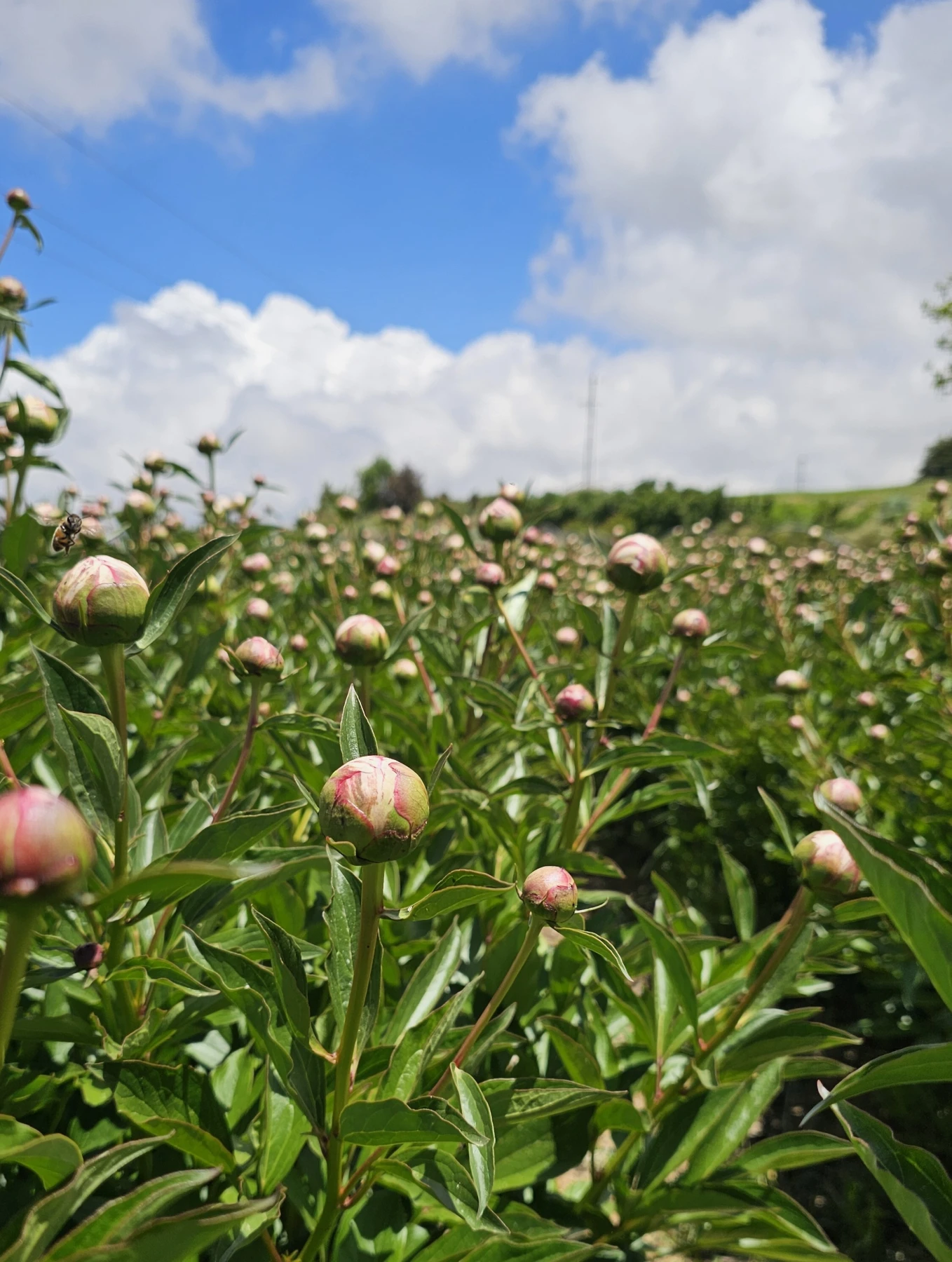
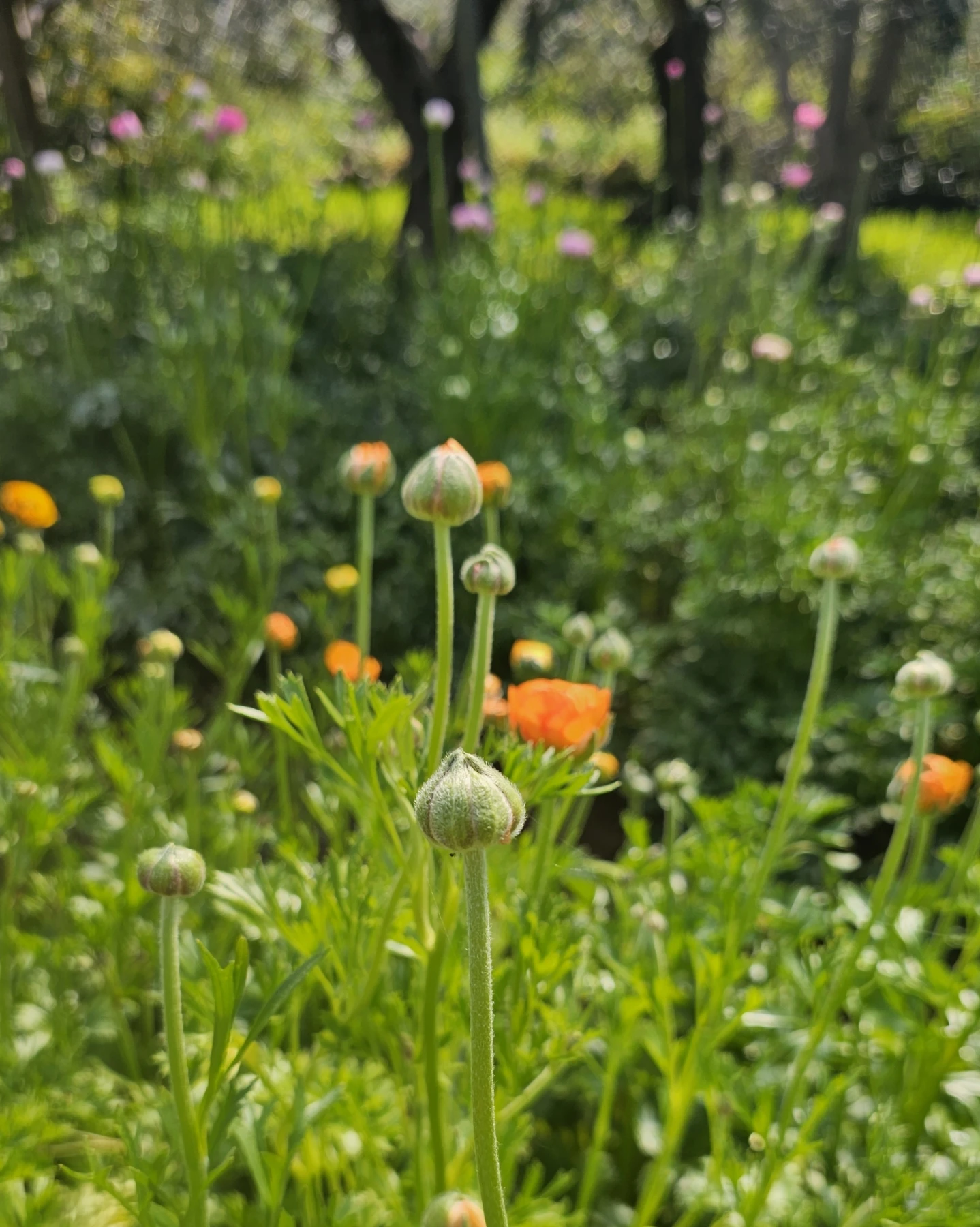
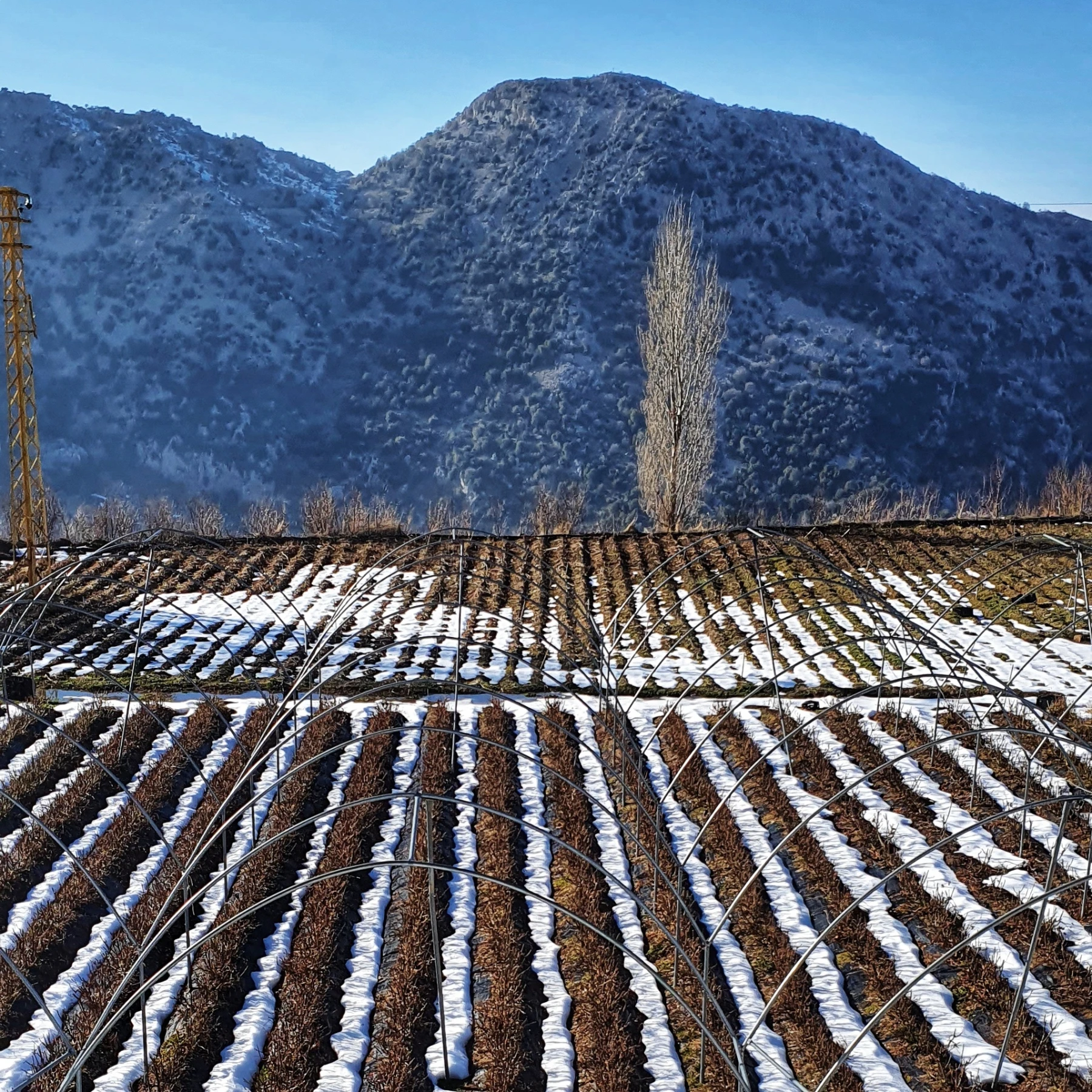
In Tune with the Earth
Years of experience have taught me a timeless truth:
There is a season for everything:
A time to prepare the earth,
A time to sow the seed,
A time to gather the harvest,
And a time to rest.
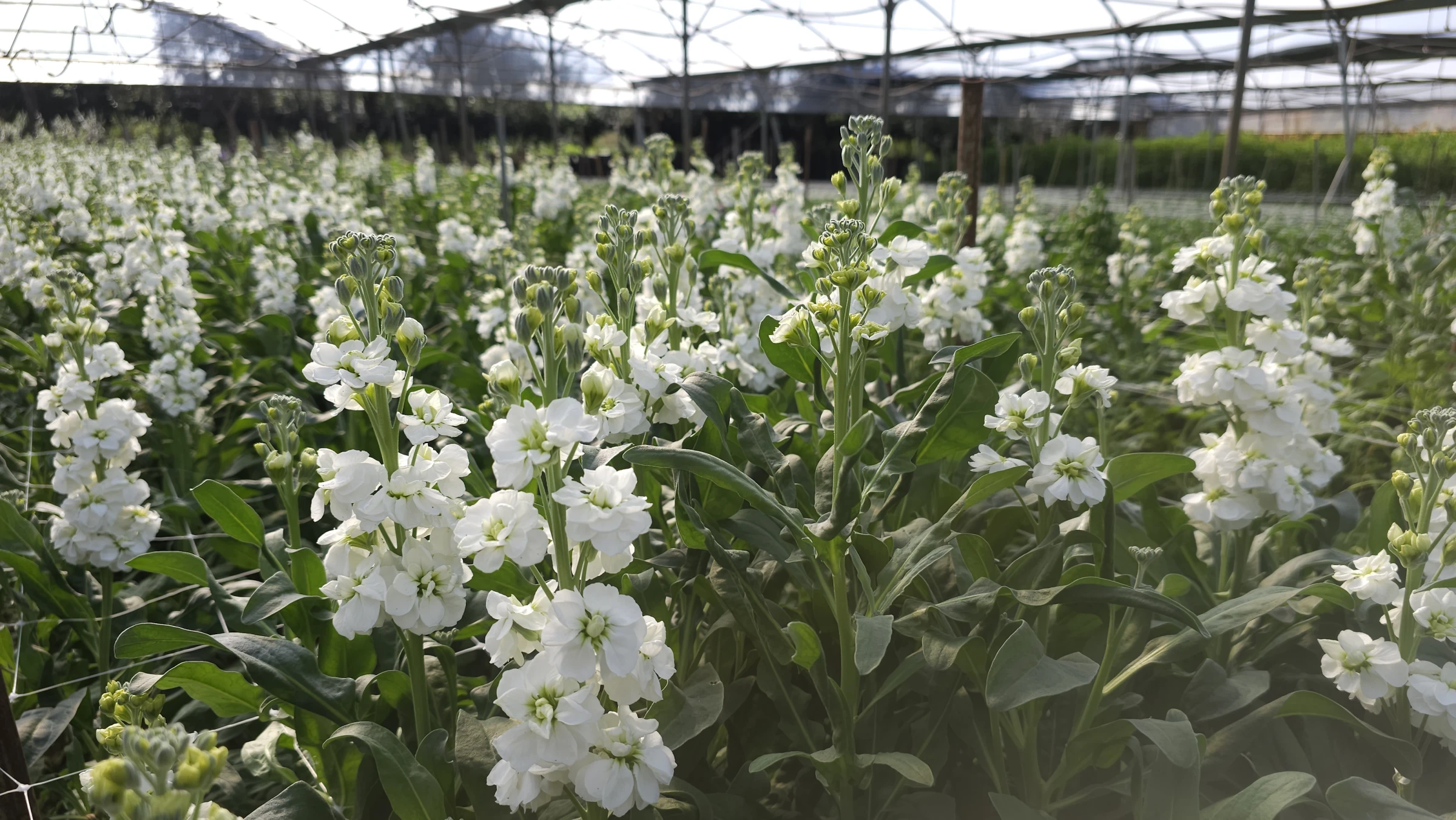
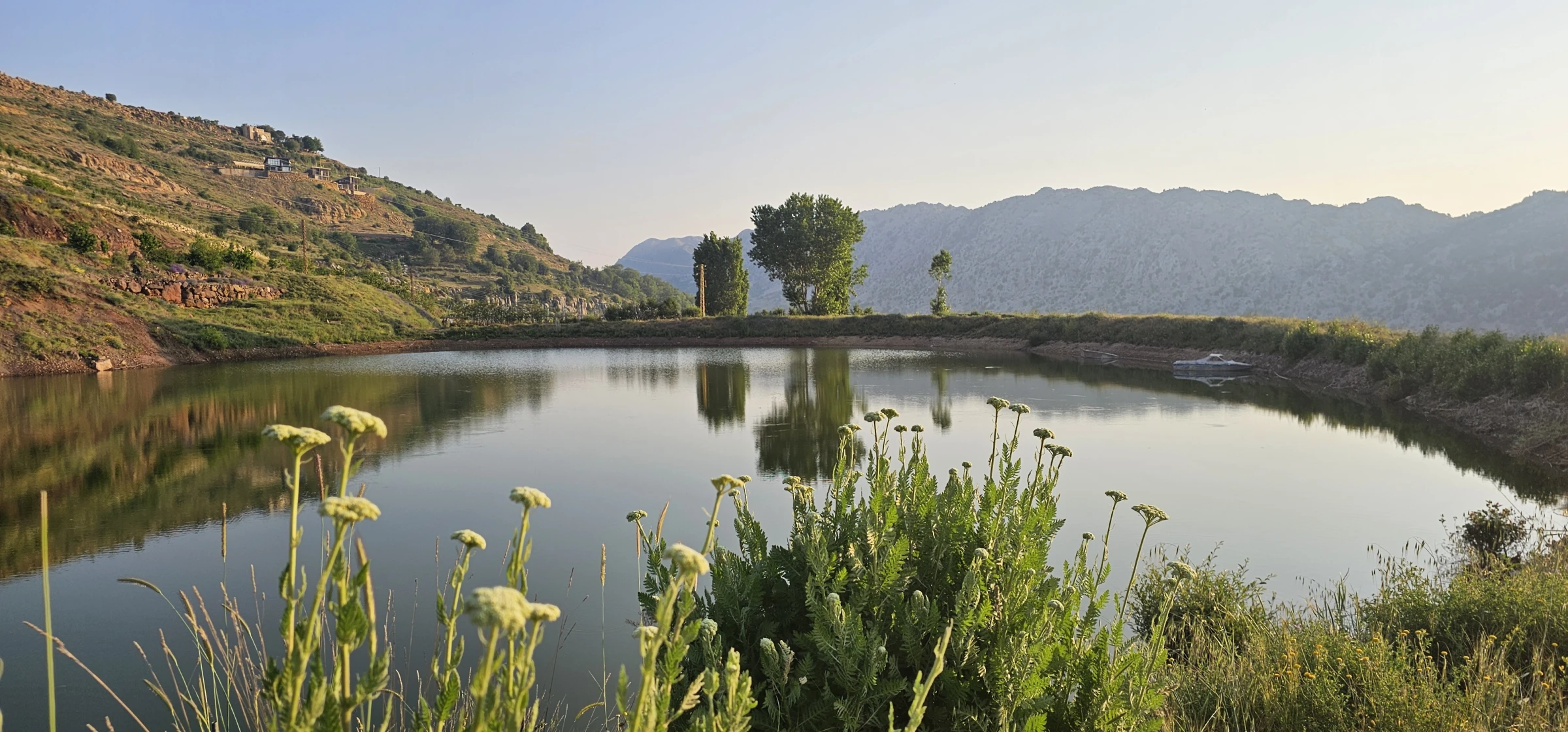
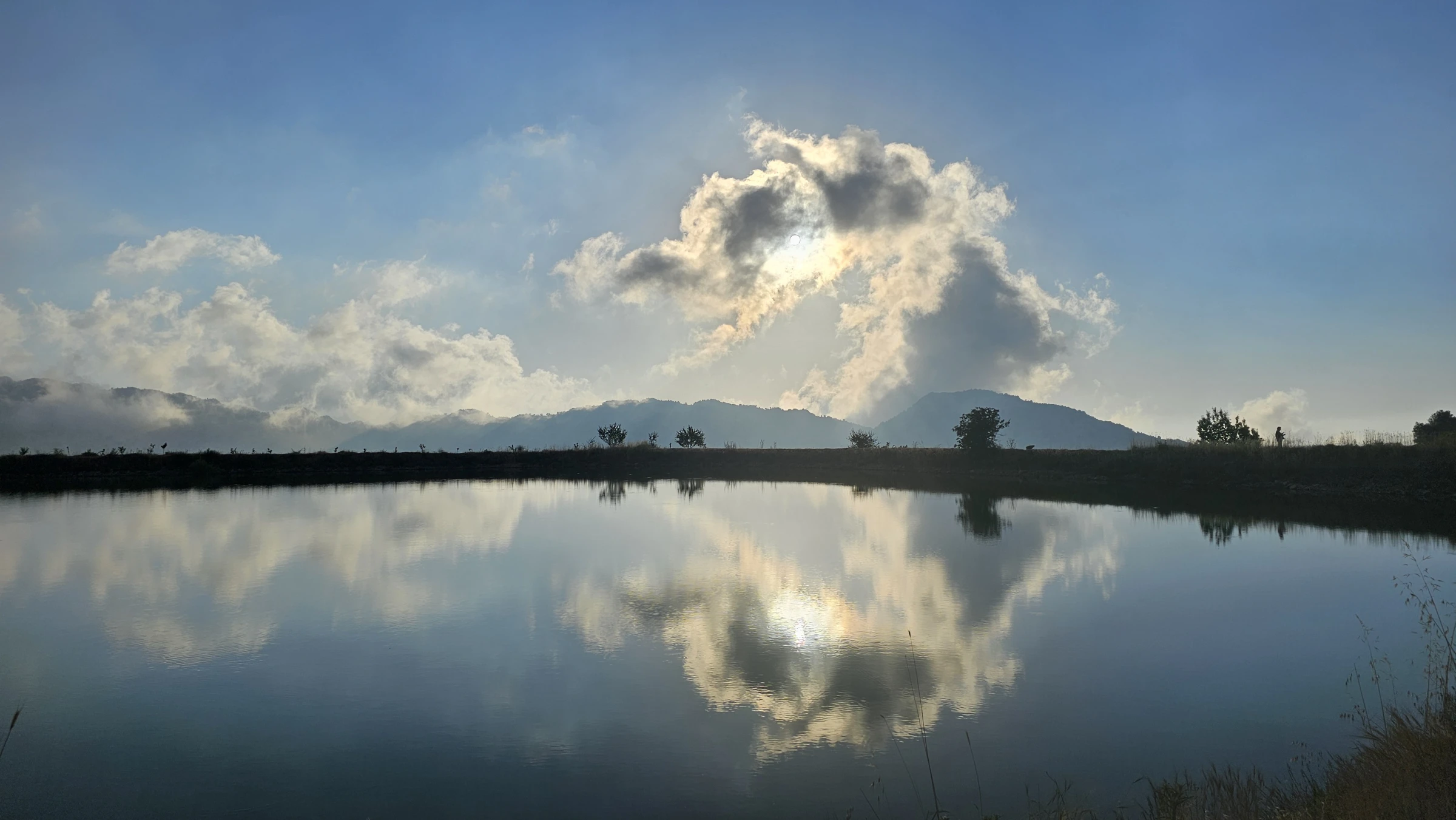
Nature has its own rhythms, and we must learn to move with it, not against it. There is no place for force or haste. When we respect the natural cycles of the seasons, we are rewarded: the plants thrive, the land breathes, and we achieve the highest quality with the lightest touch , minimal inputs, minimal disturbance.
The key is observation. Each species, each plot of land, each microclimate has its own tempo. These rhythms reveal themselves only through patience, through constant observation, trials, errors, and more trials still.
Time becomes our ally. It teaches us to listen to the soil, the weather, and the silent language of our crops. Agriculture is a patient craft, a long breath, an enduring care. But it is deeply worth it.
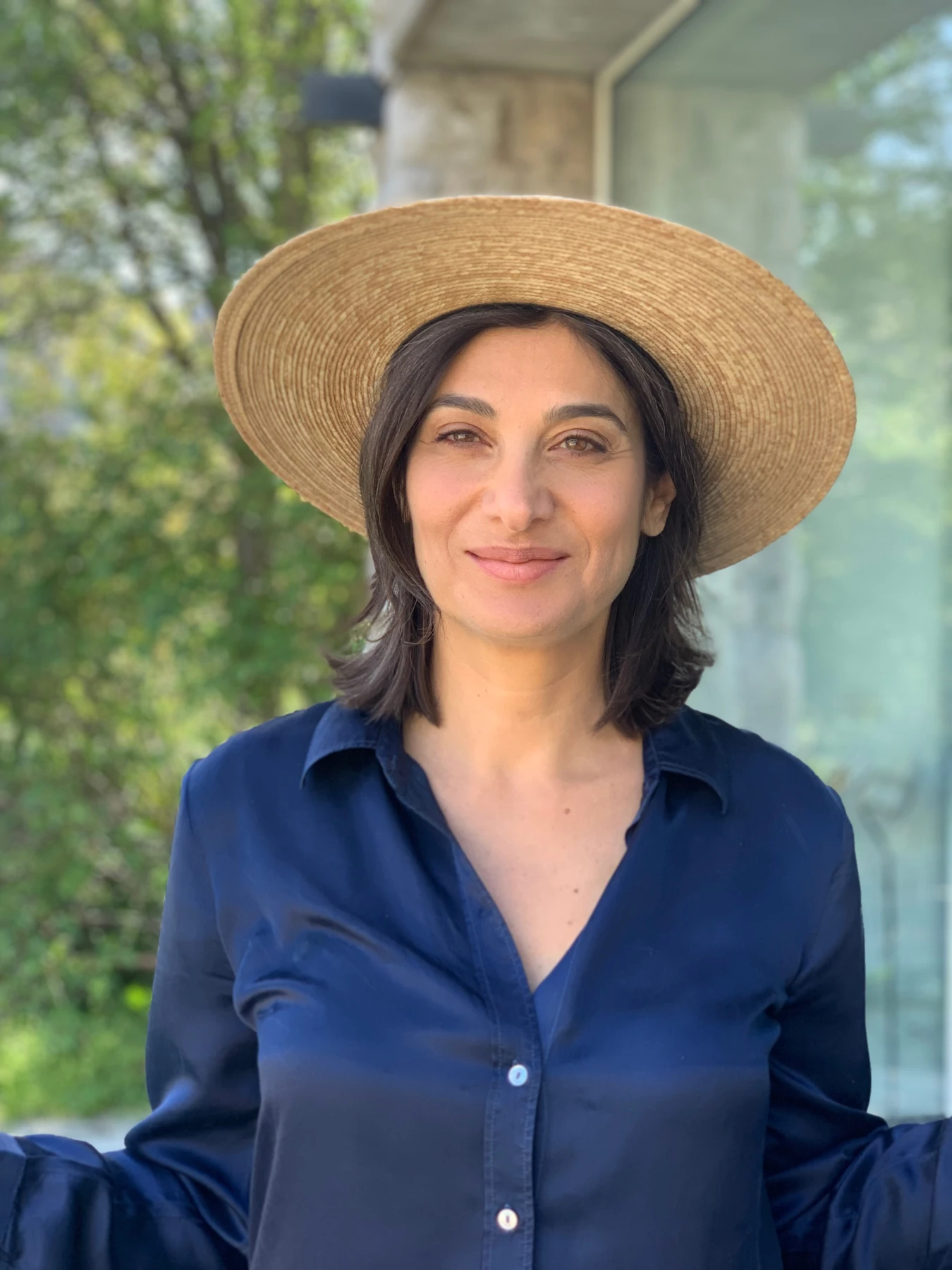
the farmer
It was 1992. My beloved Lebanon was just beginning to recover from a long war, and like many other young Lebanese, I felt called to contribute to its renewal.
At the time, almost all cut flowers in Lebanon were imported. As an agricultural engineer, I believed this could change. I believed we could grow and even export our own flowers.
So the dream began: that Lebanon would produce its own flowers, and that every flower sold across the country would be locally grown.
That first winter, my team and I planted 120 m² of tulips, a flower I have always loved. They were the first tulips commercially grown in Lebanon after the war.
But tulips weren’t enough. The market needed more variety. After selling our first harvest, I was encouraged to take a bigger step: to grow more tulips and experiment with new varieties. That was the beginning of Fleurs du Liban.
With professionalism and faith, we tried, learned from our mistakes, grew, and eventually succeeded—all while enjoying the journey.
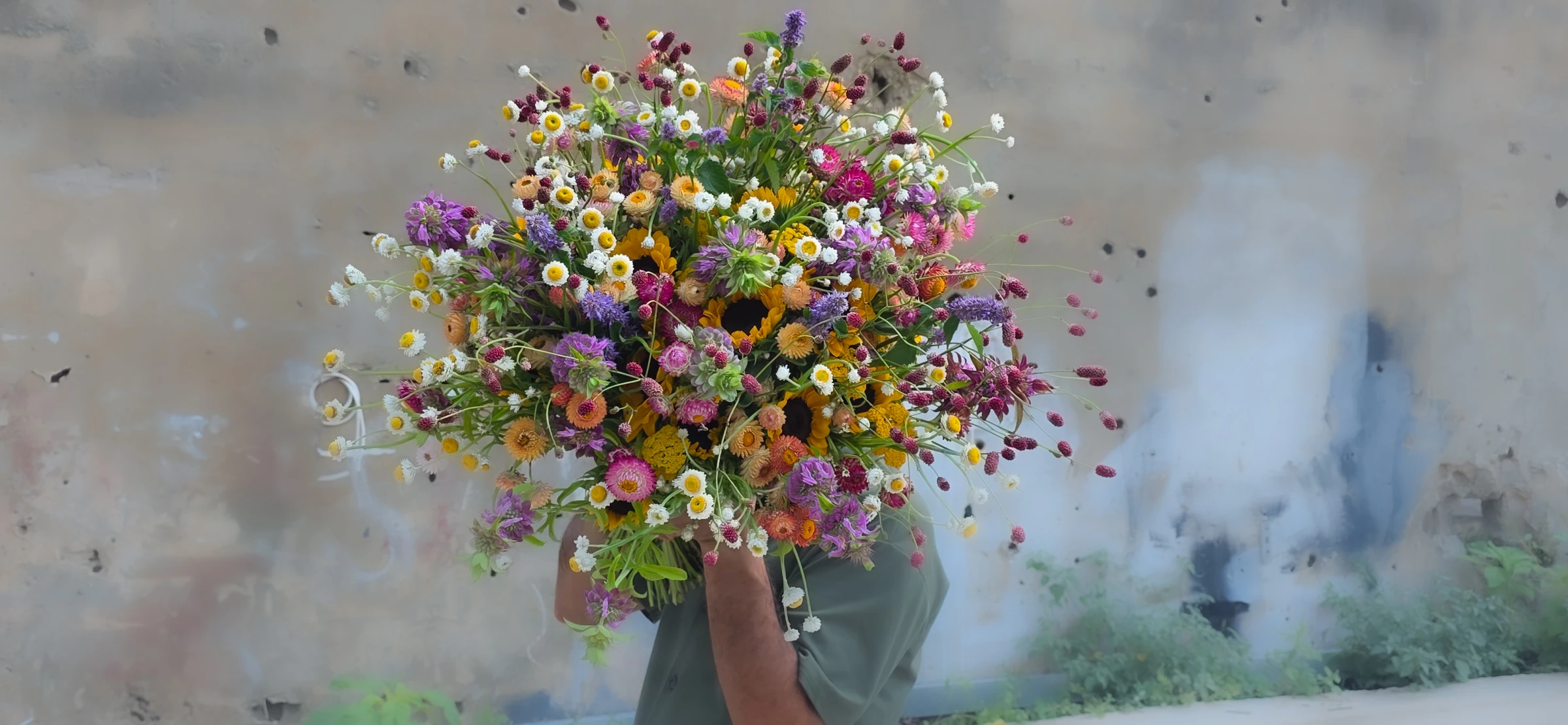
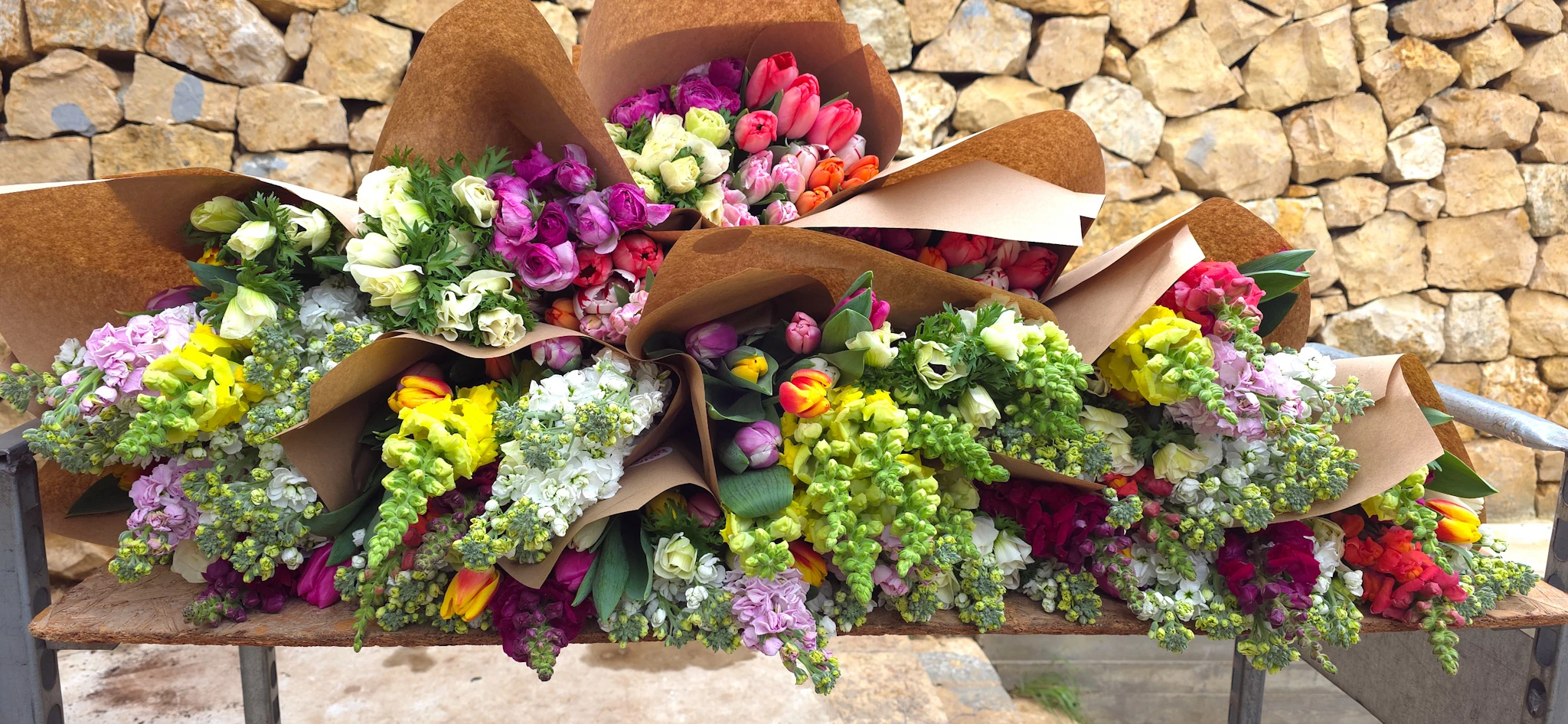
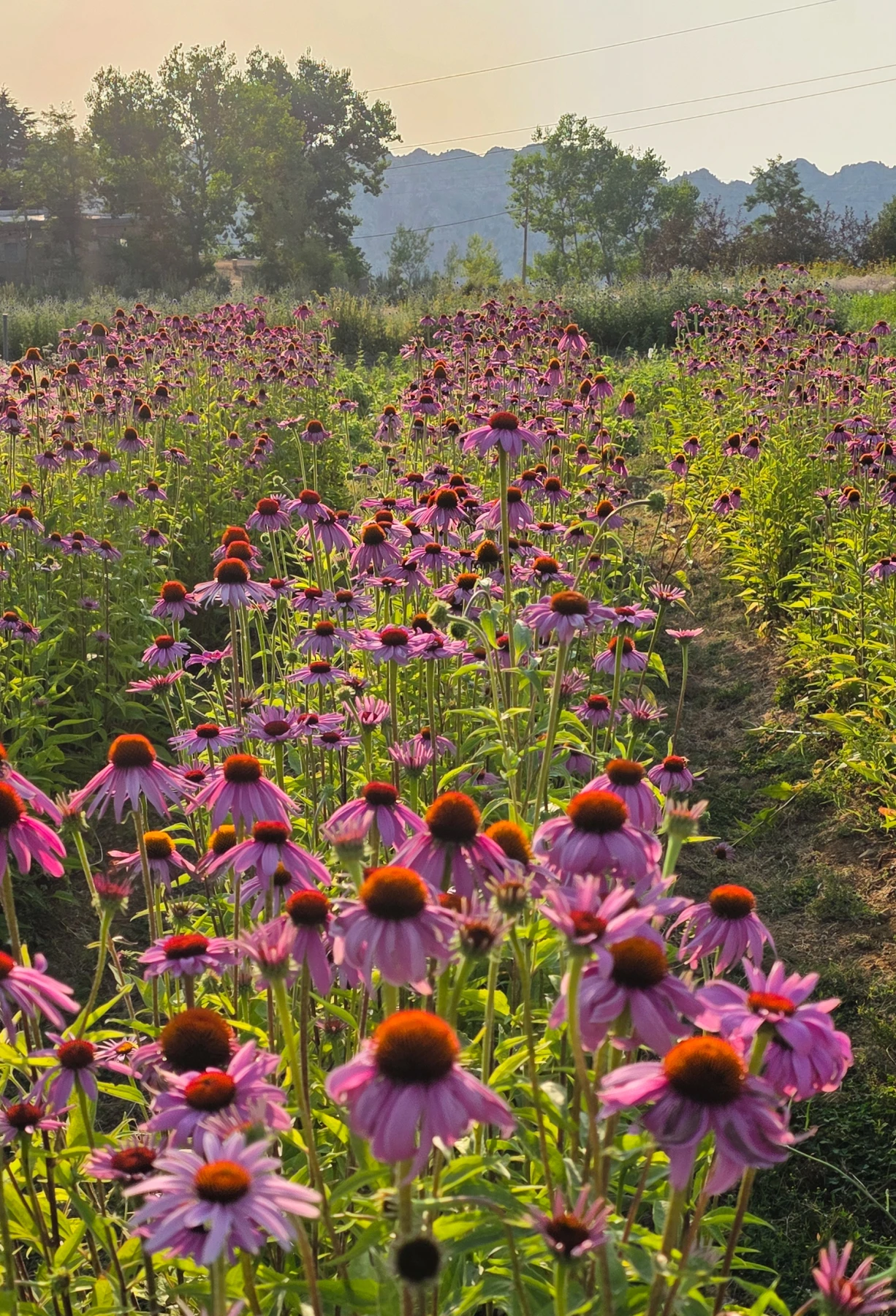
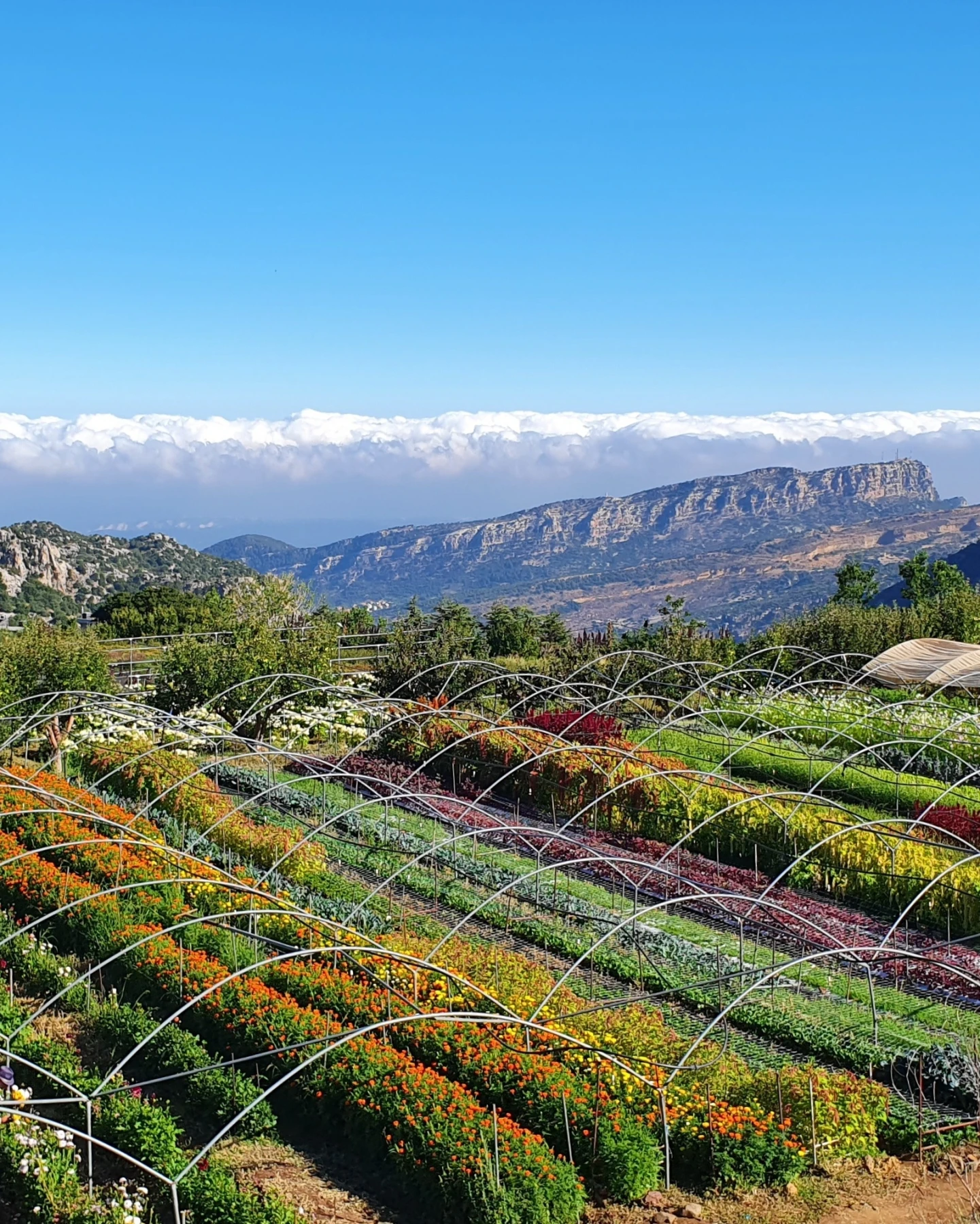
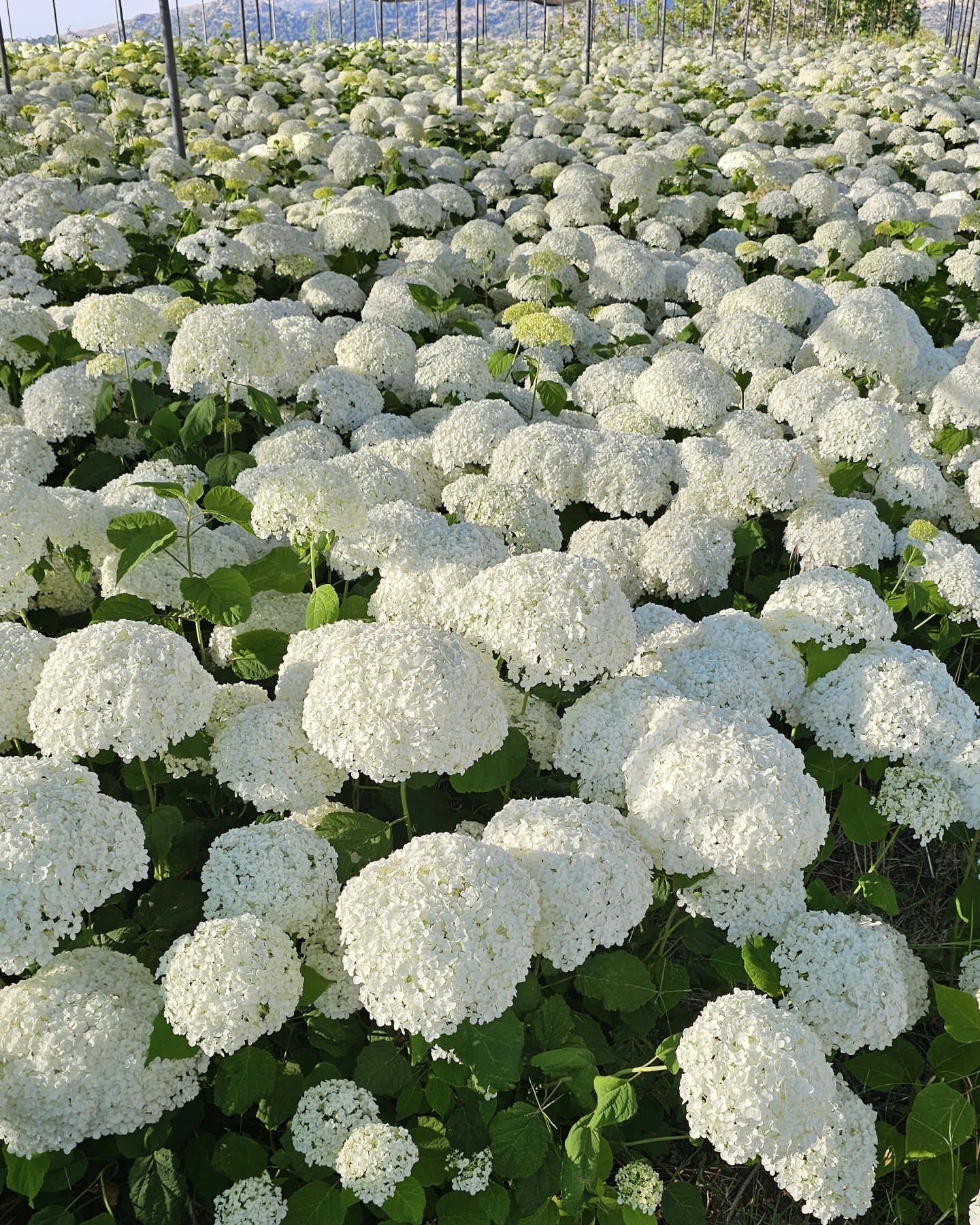
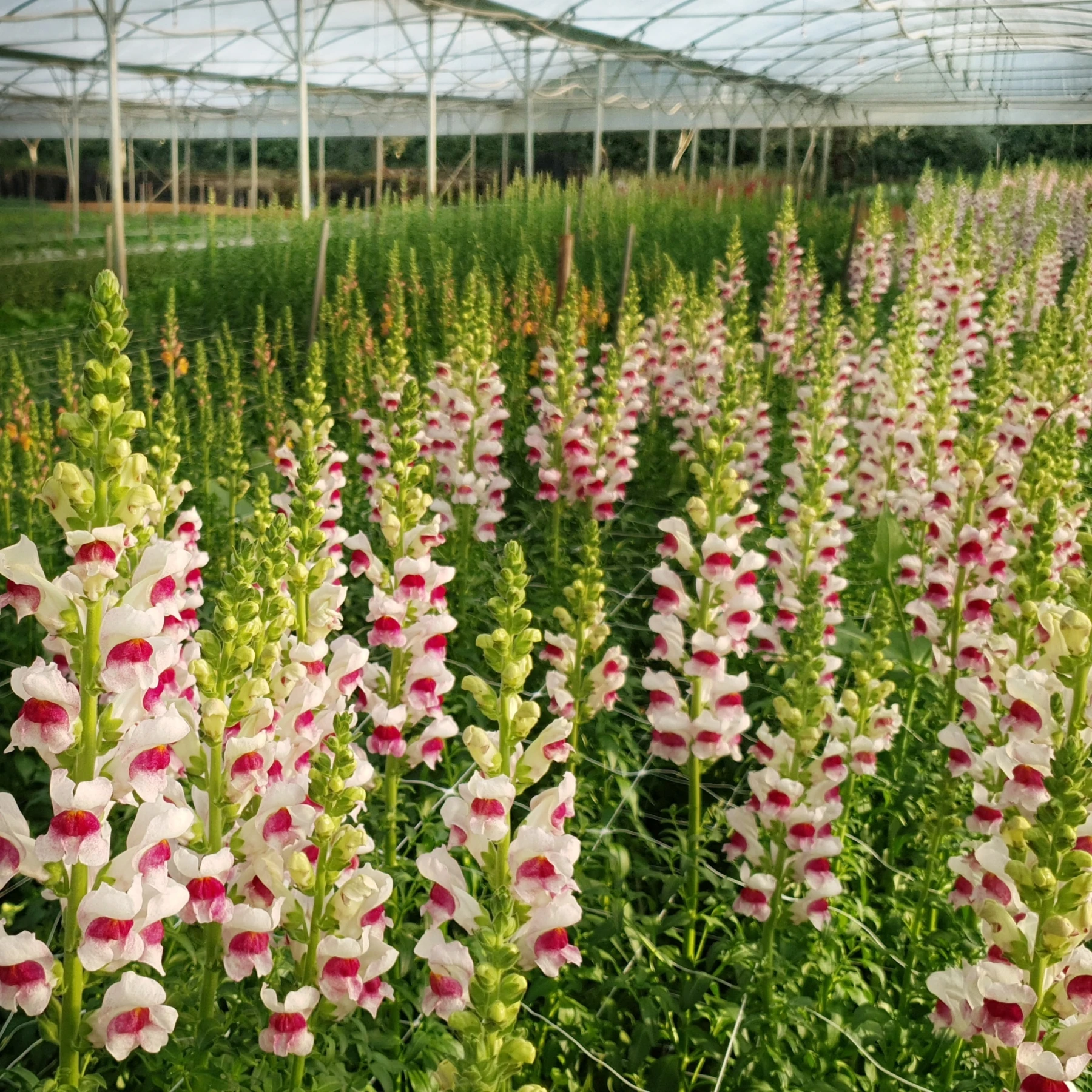
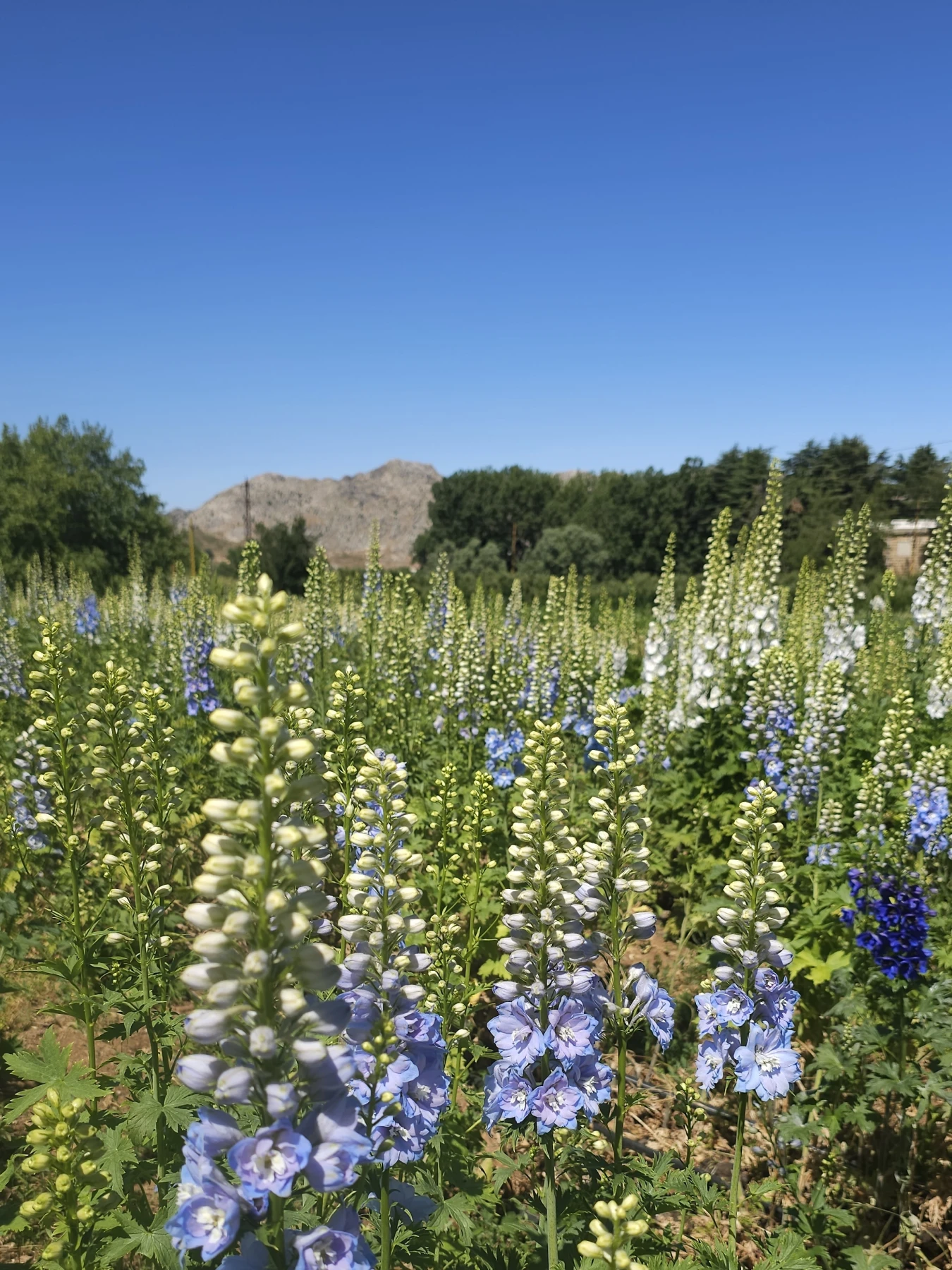
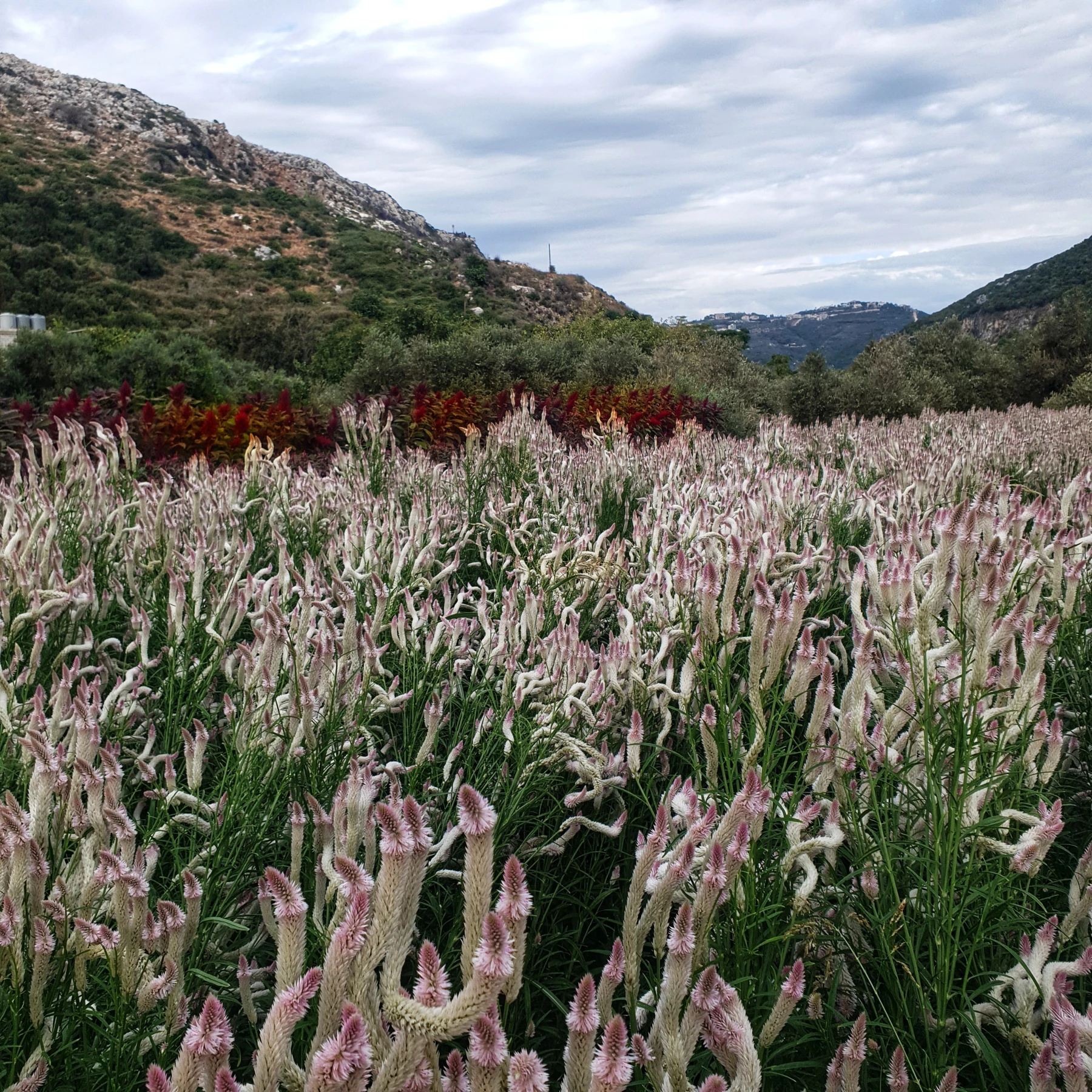
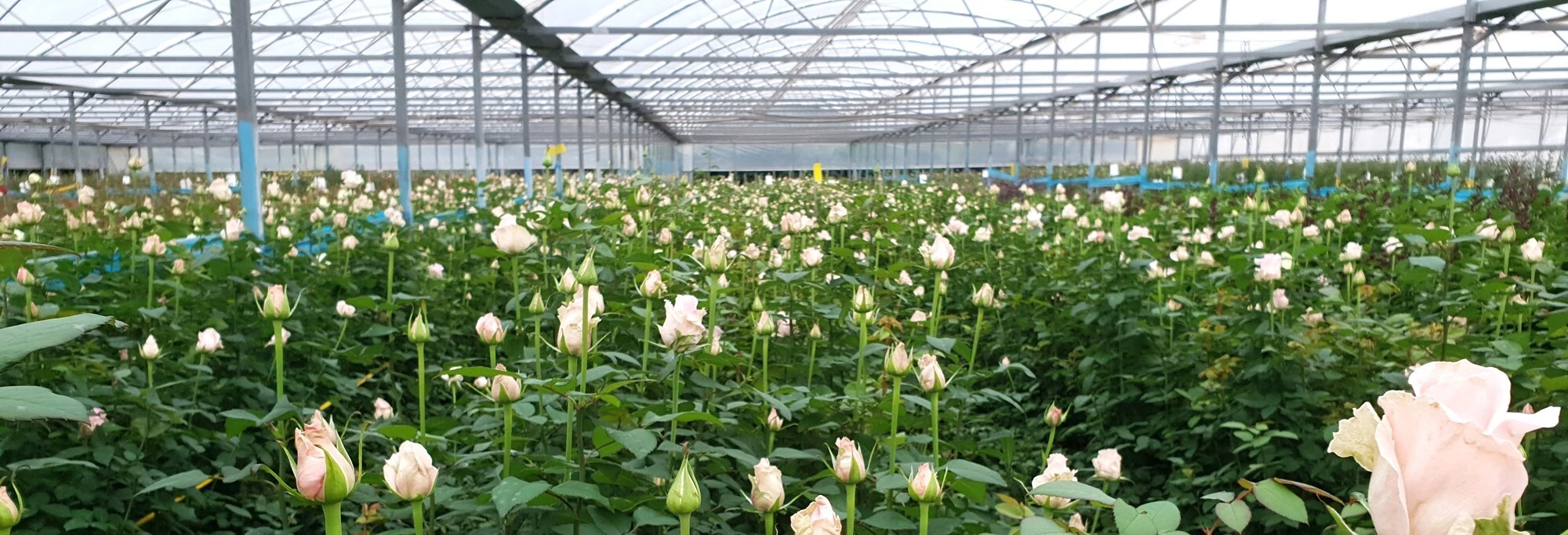
Today, we cultivate over 200 varieties of cut flowers across five Lebanese villages.
— Rania Younes
Philosophy
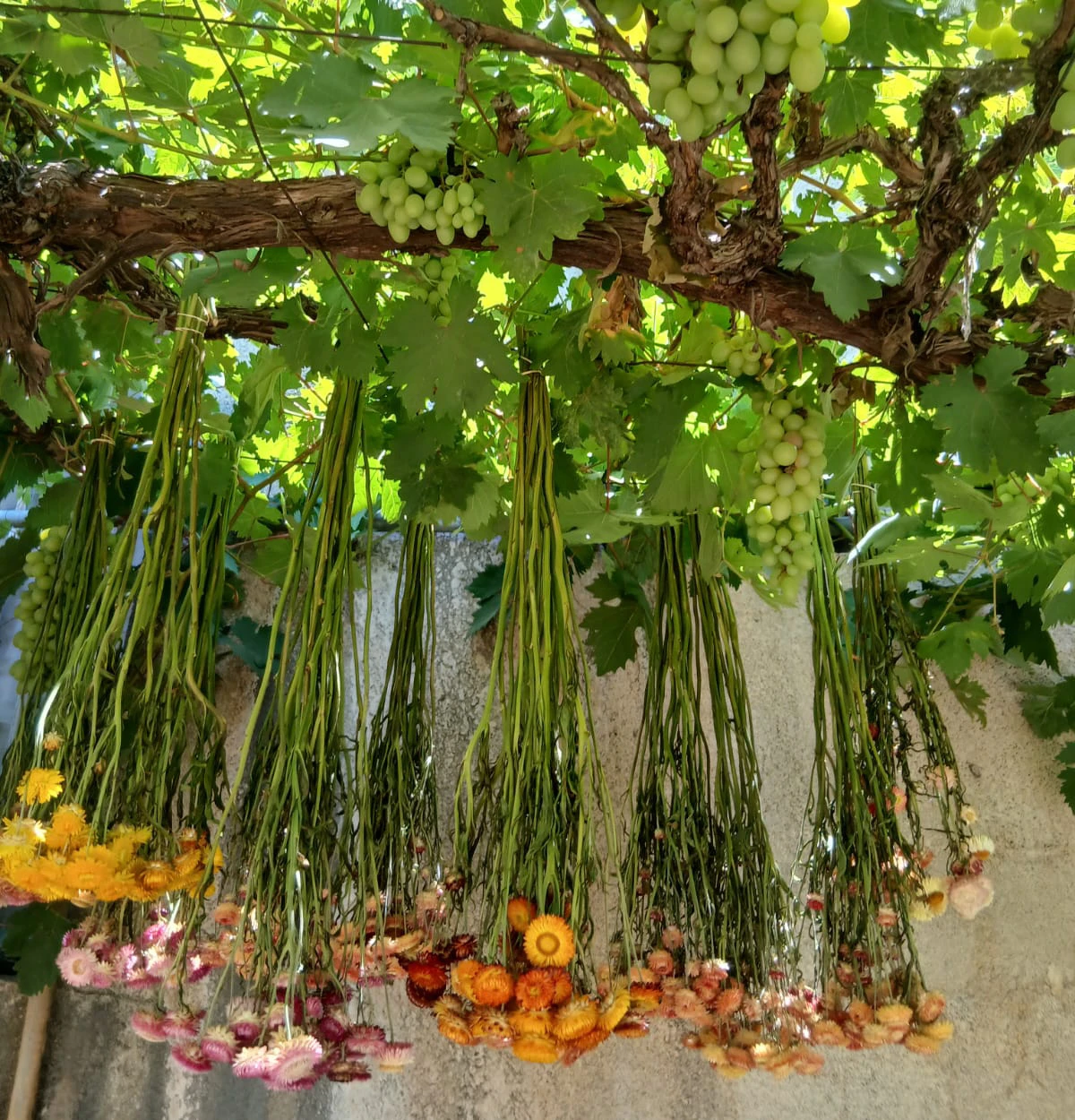
Flower trends are ever-changing , Bohemian, Minimalist, Vintage, Fragrant, Wild, Romantic, Dried… the list goes on.
Choosing next season’s varieties is a joyful ritual we look forward to every year. We source new cultivars, test them in our fields, gather customer feedback, and eventually plant them on a larger scale. It takes time , but it’s worth it.
We’ve always been trendsetters in the Lebanese flower market, and we do our very best to remain so.
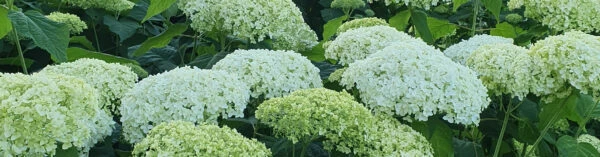
For many years, farmers believed they had to control nature to grow their crops. They won many battles ,but lost the war.
Monoculture, the overuse of fertilizers and pesticides, depleted the soil, destroyed beneficial insects, and created new, lasting problems.
Today, the model has changed. Preserving the ecological health of the land is no longer a choice , it's a necessity.
We now practice crop rotation, composting, intercropping, biological pest control, and the cultivation of seasonal, climate-adapted varieties. These techniques help us maintain a rich, resilient, and sustainable growing environment.
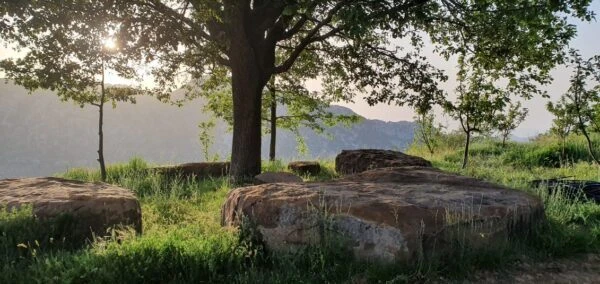
At the farm, while we cultivate beauty, every choice is rooted in knowledge. Flower farming is never random , it’s a technical craft that demands continuous analysis and thoughtful decision-making.
With countless varieties and ever-changing conditions, the challenges are constant. We navigate them daily , and that’s what makes our work so rewarding.
Our goal is to achieve the highest quality with the lowest ecological impact, while caring for the well-being of both our team and our customers.
In a fast-paced world, we choose scientific rigor, professional discipline, and a deep commitment to doing things right.
The Land, an Endangered Resource
We believe the land is not ours to own, but a legacy entrusted to us by generations stretching back over 10,000 years, since agriculture began in our region. We are merely stewards, borrowing the land with a duty to return it, preserved and fertile, to those who come after us.
In Lebanon, this legacy is at risk. Fertile soil is being sacrificed for roads and commercial centers. We forget that just a century ago, during the Great Famine, one-third of Mount Lebanon’s population was lost.
It is utopian to believe future technologies can replace the land. Artificial systems, vertical farms, lab-grown crops, consume vast energy resources. They don’t lessen our environmental impact; they shift it. Instead of sun and soil, they demand electricity, chemicals, and constant maintenance.
If we want a future of abundance, we must protect the natural foundations of life. True progress is not replacing the land—it is respecting it.

Wholesale Supply

Secure payment method

Bouquet delivery to Beirut & beyond